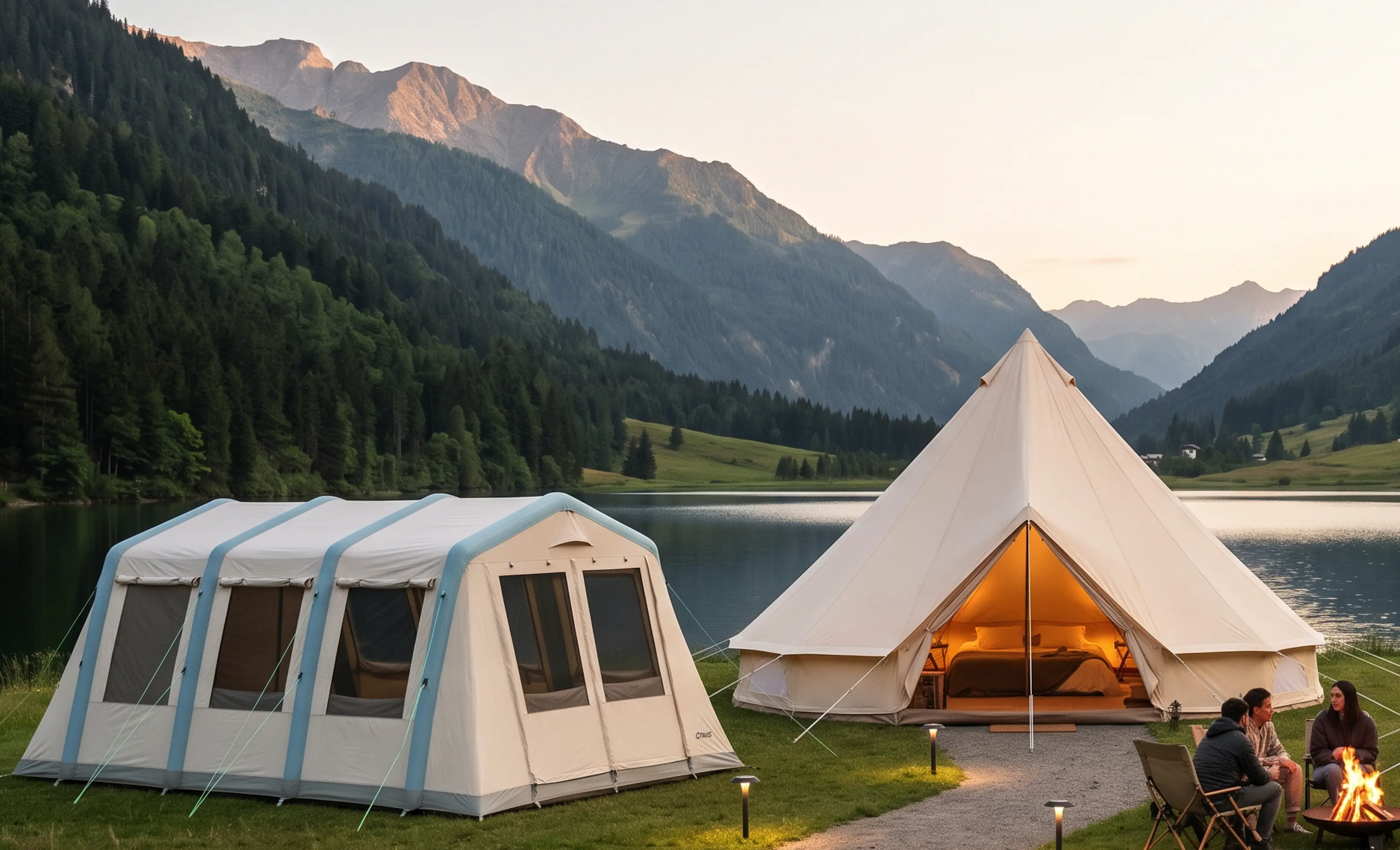
Key Takeaways: Top Glamping Tents in 2026
The modern glamping market offers fully insulated, 4-season shelters that combine luxury with advanced structural engineering. Based on setup speed, weatherproofing, and overall craftsmanship, the top three glamping tents are:
- RBM Outdoors Panda Medium: Ultimate 4-season all-weather fortress with a rapid pop-up hub mechanism, double-layer thermal insulation, and an integrated stove jack.
- Coody 10.0 PRO Inflatable Tent: Premium luxury air tent with high-pressure TPU pillars for effortless setup, superior standing room, and a built-in stove jack.
- Nordisk Asgard 12.6 Bell Tent: Iconic Scandinavian polycotton bell tent offering high breathability and a spacious 12.6 m² interior layout.
When choosing a shelter, prioritize vertical-wall geometries for maximum headroom, breathable fabrics to prevent moisture buildup, and heavy-duty hardware for long-term durability.
Side-by-Side Spec Comparison: Top 3 Glamping Tents
|
Technical Specification / Feature |
1. RBM Outdoors Panda Large |
2. Coody 17.2 Inflatable Tent |
3. Stout Pro Series Bell Tent |
|
Primary Category / Style |
Extreme 4-Season All-Weather Hub Tent |
Premium Inflatable Heavy-Duty Air Tent |
Traditional Heavyweight Canvas Bell Tent |
|
Frame Architecture |
Quick Pop-Up Hub Mechanism |
High-Pressure TPU Air Pillars |
Steel Center Pole & Steel A-Frame |
|
Usable Interior Floor Area |
12.6 m² (135.62 sq ft) |
12.6 m² (135.62 sq ft) |
~19.6 m² / 210 sq ft (16ft model) |
|
Outer Peak Height |
2.1 m (82.67 in) |
2.1 m (82.67 in) |
3.0 m (118 in) |
|
Inside Peak / Sidewall Height |
2.2 m peak / 1.62 m wall (63.78 in) |
2.2 m peak / 1.62 m wall (63.78 in) |
3.0 m peak / 0.6 m wall (24 in) |
|
Total System Weight |
43.2 kg (95.24 lbs) |
43.2 kg (95.24 lbs) |
~40.0 kg (88 lbs) |
|
Fabric & Floor Construction |
Double-Layer Awning + Removable Oxford Floor |
Heavy Canvas Awning + Removable Oxford Floor |
100% Cotton Canvas + PVC Floor |
|
Stove Jack Integration |
1 Built-in Jack (90 mm / 3.54 in) |
1 Built-in Jack (90 mm / 3.54 in) |
Adjustable Stove Jack (3–6 in) |
|
Doors & Windows |
3 Entrances, 5 TPU Velcro Windows |
3 Entrances, 5 TPU Velcro Windows |
1 A-Frame Door, 360° Mesh Walls |
|
Included Hardware & Extras |
20 Pegs, 14 Ice Pegs, Repair Kit, Organizers |
Repair Kit, Guy Ropes, Organizers, Bag |
Rebar Stakes, Reflective Ropes, Bag |
Have you ever stopped to wonder why the ancient desire to sleep beneath the stars has suddenly evolved into a multi-billion-dollar luxury movement? For centuries, venturing into the wild meant accepting a harsh trade-off: trading domestic warmth and plush bedding for damp sleeping bags, back-straining ground pads, and flimsy fiberglass frames that buckled under the slightest breeze. In 2026, that compromise is officially obsolete. The best camping tents of 2026 have ushered in a golden age of outdoor hospitality, transforming remote wilderness spots into climate-controlled, five-star sanctuaries that rival luxury boutique hotels.
Choosing to buy a top-tier luxury camping tent requires looking far beyond basic weather protection. A modern glamping tent acts as an architectural masterpiece engineered to withstand nature's most volatile moods while enveloping its occupants in complete comfort. Whether you are aiming to construct a semi permanent backyard retreat, launch a lucrative commercial glamping resort business, or take your family on an unforgettable winter car camping trip, today's market offers an astonishing variety of options. From heavy duty canvas bell tent models that pay homage to expedition history to futuristic inflatable tent structures and double-layered hub fortresses, the choices are richer and more capable than ever before.
"Wilderness is not a luxury but a necessity of the human spirit," Edward Abbey famously wrote, and equipping that spirit with an uncompromising shelter transforms every trip into a legendary escape. In this comprehensive review, we will dissect the absolute best glamping tents on the market today. We will analyze material thermodynamics, compare structural frame mechanics, and highlight the technical features—like integrated stove jack ports for wood stove heating and tall standing height clearances—that distinguish ordinary gear from true glamping royalty.
How to Choose the Best Glamping Tent for Your Next Camp in 2026
Navigating the landscape of premium glamping tents requires an understanding of how structure, volume, and material science intersect. Before pulling the trigger on a purchase, you must critically evaluate your primary camping style and geographic environment. Are you searching for an easy-setup air tent that inflates in minutes for weekend getaways, or do you need an impenetrable 4 season wall tent capable of handling heavy winter snow loads and howling gale-force wind? Understanding the physical trade-offs between frame styles is the first crucial step toward selecting a shelter that will serve you reliably for a decade or more.
The internal architecture of a glamping tent dictates how comfortably you can move, sleep, and lounge inside the tent. Traditional bell tent configurations, supported by a central steel pole, offer towering apex heights but feature steeply sloped walls that significantly reduce usable headroom around the perimeter. Conversely, cubic dome tents and multi-hub pop-up structures feature near-vertical sidewalls, maximizing every square inch of usable floor space. For an extended family camping trip or a couple seeking room for plush queen beds and storage dressers, vertical wall clearance is often far more valuable than a single high peak point in the center of the room.
Finally, long-term durability and climate adaptability must be top priorities when evaluating tent options for sale. A true 4 season shelter must manage extreme thermal swings—keeping you insulated during freezing winter blizzards and cool under scorching summer sun. Features like dual-layer insulation, heavy-duty Oxford groundsheets, clear TPU windows, bug-proof mesh doors, and readily replaceable parts ensure your investment withstands intense UV exposure and heavy rainfall without deteriorating. By prioritizing high-grade fabric treatments that resist mold and water penetration, you guarantee that your wilderness basecamp remains dry, fresh, and inviting in every season.
Top 3 Best Glamping Tents on the Market: The Definitive 2026 Review & Comparison
To help you buy with total confidence, our gear experts conducted rigorous field testing across diverse climates, evaluating the most prominent tents on the market. We judged each candidate on structural integrity under high wind, waterproofing efficiency, internal atmospheric regulation, setup speed, and overall manufacturing craftsmanship. What emerged from our tests was a clear hierarchy of performance, showcasing how advanced material engineering and thoughtful architectural design elevate a camping trip into a luxury living experience.
The three finalists featured in this guide represent the pinnacle of current tent design, catering to different priorities ranging from extreme winter hot-tenting to rapid air inflation and classic canvas elegance. Whether you plan to pitch your shelter on a frozen mountain plateau or setup a permanent bell tent deck in your backyard, these top-rated models deliver unmatched security, comfort, and prestige.
Below, we have compiled a direct side-by-side technical comparison matrix outlining the exact specifications, dimensions, materials, and hardware included with our top three picks.
1. RBM Outdoors Panda Large (The Undisputed 4-Season All-Weather Fortress)
Securing the prestigious number one rank on our list, the RBM Panda Large from brand RBM Outdoors is an absolute tour de force in extreme-weather engineering. Designed explicitly for hardcore outdoor enthusiasts who demand absolute safety in sub-zero winter blizzards as well as summer heat, this heavy-duty hexagonal pop-up shelter sets a new benchmark for structural resilience. Utilizing a rapid hub-tensioning mechanism, the Panda Large transforms from a compact pack size into a sprawling, double-layered fortress in a fraction of the time required by traditional pole Tents.
The technical parameters of the RBM Panda Large are nothing short of impressive. It offers a massive 12.6 square meters (135.62 square feet) of usable living area inside the tent, measuring 4.5 meters (177.16 in) from corner to corner and 3.9 meters (153.54 in) from wall to wall. The exterior height reaches 2.1 meters (82.67 in), while the interior peak expands to 2.2 meters (86.61 in) with a vertical sidewall height of 1.62 meters (63.78 in). This boxy, high-walled geometry allows tall campers to walk freely throughout the room without hunching over. Weighing 43.2 kg (95.24 lbs), its double-layer awning construction traps heat exceptionally well, while a removable Oxford fabric floor ensures moisture from thawing snow never creeps inside.
Functionality is elevated through brilliant, thoughtful appointments. The tent features 3 independent entrances and 5 transparent TPU velcro windows that allow breathtaking panoramic views while sealing out freezing rain. Winter hot-tenting is fully supported by an integrated 90 mm (3.54 in) fire-resistant stove jack for a wood stove. RBM Outdoors equips the Panda Large with an unmatched accessory package: 20 heavy-duty ground pegs, 14 specialized ice screw pegs for frozen tundra, 4 awning support legs, 2 detachable velcro wall organizers, a overhead dome net storage shelf, and a comprehensive spare parts kit containing Oxford repair glue, replacement screed locks, guyline cylinders, and patch fabric. It is the undisputed king of all-season glamping fortresses.
2. Coody 17.2 Inflatable Tent (The Modern Luxury Air Masterpiece)
Taking a very close second place, the Coody 17.2 inflatable tent represents the absolute zenith of modern air beam technology. Perfect for travelers who refuse to wrestle with rigid metal poles or hub hinges, this heavy-duty inflatable tent uses high-pressure TPU air pillars that inflate seamlessly via an air pump. Once pressurized, the air frame forms a rigid, highly flexible skeleton that effortlessly absorbs wind gusts, flexing under extreme pressure and returning to its original form without structural damage.
Sharing the exact 12.6 square meter (135.62 sq ft) floor plan and 43.2 kg (95.24 lbs) weight class as our top contender, the Coody 17.2 provides a magnificent, open atmosphere. It features an inner tent insulated by a heavy-duty canvas outer layer, a zip-out Oxford floor, 5 clear TPU windows, and 3 full-sized entry doors. Standing headroom is identical at a generous 2.2 meters inside, making it an idyllic luxury suite for a romantic couple getaway or a large family basecamp. A built-in 90 mm (3.54 in) stove jack allows hot-tenting in deep winter, keeping the internal climate warm and dry.
The Coody 17.2 shines brightest in its effortless setup procedure and complete kit packaging. Included directly in the box is a fully stocked repair kit featuring specialized Oxford glue, spare valves, guyline tension cylinders, and extra TPU window panes. While it lacks the double-walled arctic thermal insulation of the RBM Panda Large, its sleek aesthetic, rapid air deployment, and outstanding build quality make it one of the most desirable luxury camping tents on the market today.
3. Stout Pro Series Bell Tent (The Timeless Canvas Classic)
For glampers who cherish the romantic aesthetic, natural acoustics, and historic heritage of traditional cotton canvas, the Stout Pro Series bell tent claims the third spot on our podium. Built around a heavy-duty steel center pole and a rigid A-frame door entrance, this circular canvas tent is an iconic staple across glamping resorts and backyard setups worldwide. Crafted from 100% breathable, mold-resistant cotton canvas, it naturally regulates internal humidity, preventing condensation from coating the interior walls during cold nights.
The Stout Pro Series excels as a semi permanent installation. Featuring a 3.0-meter (118 in) center peak height, it creates a soaring, cathedral-like ceiling that easily accommodates king-sized bed frames and lounge furniture. An adjustable stove pipe jack accommodates various wood stove chimney diameters, making winter camping comfortable. During hot summer days, the heavy PVC groundsheet can be unzipped, allowing you to roll up the canvas sidewalls and transform the shelter into a shaded, 360-degree open-air canopy.
Despite its undeniable charm and massive interior volume, the Stout Pro Bell Tent requires significantly more physical labor and time to pitch than modern pop-up or air tents. Tipping the scales at roughly 40 kg with heavy steel poles and rebar stakes, it is less practical for quick, multi-stop car camping trips. However, if your goal is to build a long term glamping business or a permanent backyard sanctuary, its timeless appeal and proven durability make it a fantastic investment.
Canvas vs Synthetic vs Inflatable: Structural Technology and Material Science
Choosing the right tent fabric is a critical decision that impacts climate comfort, maintenance requirements, and long-term lifespan. Traditional 100% cotton canvas operates through a fascinating natural mechanism known as "weathering." When rain hits raw canvas, the organic cotton fibers swell tightly against one another, forming an impermeable natural seal against water. Simultaneously, tiny micropores in the weave allow human breath and cooking moisture vapor to vent outward, eliminating damp condensation. However, pure canvas is heavy, absorbs water weight when wet, and requires complete drying before storage to prevent mold.
Synthetic materials like high-denier polyester, commonly used in lightweight dome tents and backpacking tents, rely on synthetic polyurethane (PU) or silicone coatings for waterproofing. While polyester is lightweight, highly portable, and inherently resistant to rot, it is completely non-breathable. In cold weather, warm air inside the tent strikes the cold synthetic walls, forming liquid water droplets that drip down onto sleeping bags. Modern technical polycotton (a hybrid weave of polyester and cotton) solves this dilemma, offering the breathability and UV resistance of natural canvas alongside the strength, lighter weight, and rapid drying times of synthetics.
Frame architecture has experienced a parallel revolution. Traditional rigid metal poles provide excellent vertical support but are susceptible to bending or snapping under severe lateral wind shear. Modern pop-up hub systems, such as those found on the RBM Panda Large, utilize pre-tensioned, heavy-duty fiberglass or composite rods that deploy in seconds and absorb heavy stress. Meanwhile, high-pressure TPU air beams replace metal entirely, offering a flexible air skeleton that cannot bend or snap. Matching the right fabric blend with an appropriate structural frame ensures your basecamp performs flawlessly regardless of weather conditions.
Practical Advice for Setting Up a Glamping Basecamp in Harsh Environments
Successfully deploying a luxury glamping site in isolated wilderness conditions requires careful preparation and tactical execution. Site selection is the foundation of a safe basecamp: always choose level, slightly elevated ground with natural windbreaks like rock formations or dense timber. Clear the footprint completely of sharp rocks, thorny vines, or jagged pinecones that could puncture the bottom groundsheet. Pitching over a thick, protective footprint tarp provides an extra insulating layer and protects your primary Oxford floor from groundwater absorption and abrasion.
When camping in cold winter climates, operating a wood stove inside the tent requires strict adherence to fire safety protocols. Always verify that your stove pipe passes through a certified, heat-resistant stove jack with adequate clearance from surrounding fabric. Place a fireproof mat directly beneath the stove to catch stray embers, and install a battery-operated carbon monoxide detector inside the sleeping area. Keep lower wall vents slightly cracked even in sub-zero weather; continuous air exchange flushes out ambient humidity before it can freeze into frost on the inner walls.
Finally, proper gear maintenance and taking advantage of included repair kits will extend the operational life of your shelter by decades. Always keep zipper tracks clean of mud and sand using a soft brush, and apply silicone zipper lubricant annually. Never pack away a canvas or polycotton tent while damp; if forced to strike camp in the rain, loosely pitch the tent in a garage or barn within 24 hours to air dry completely. By mastering these maintenance fundamentals and keeping spare repair parts—such as Oxford patch glue, extra guyline cylinders, and screed locks—close at hand, your glamping basecamp will remain a luxurious, stormproof haven for years to come.